
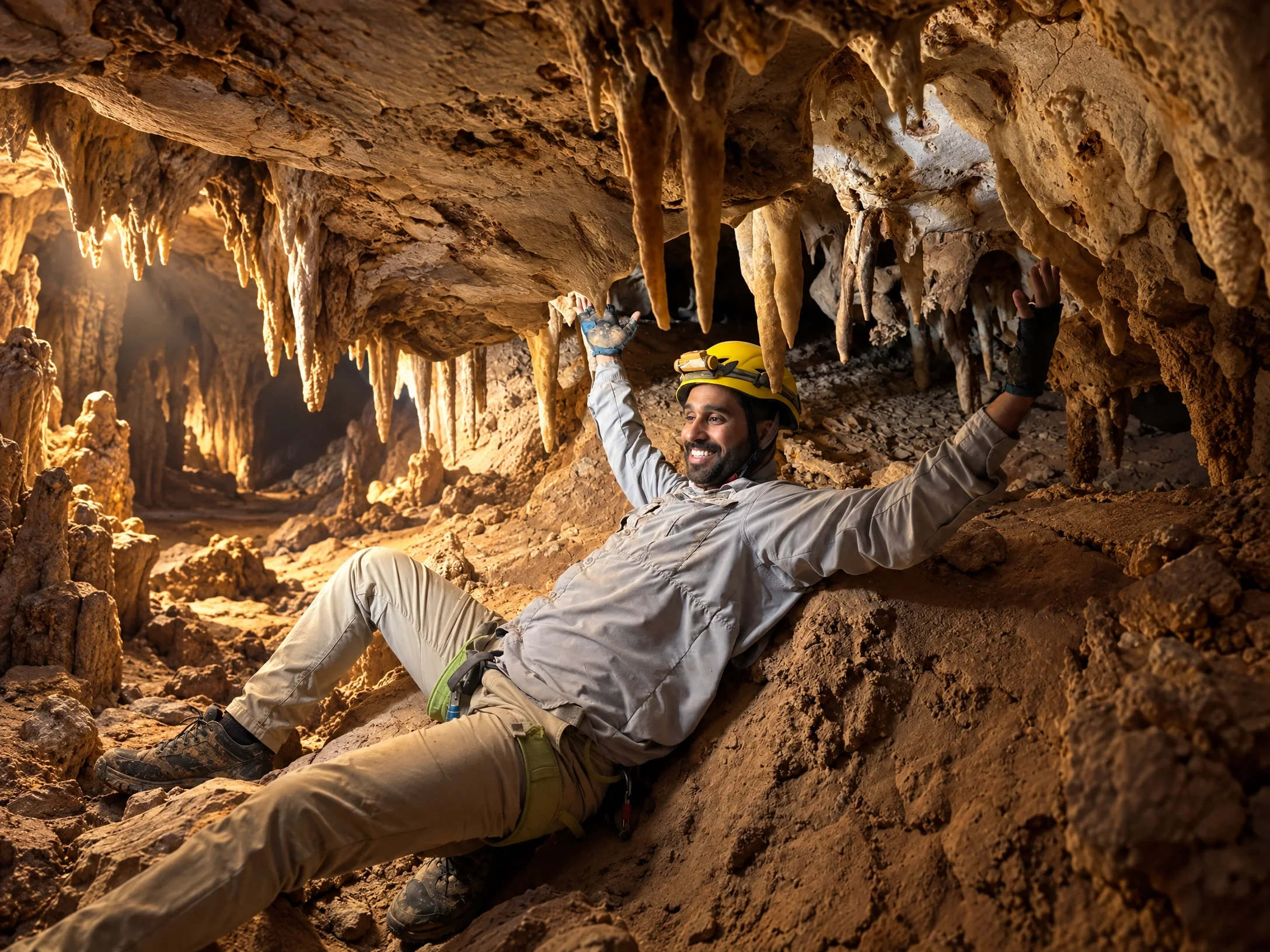
The Umm Jirsan system lies within the volcanic environment of Harrat Khaybar and demonstrates that caves are not simply dark spaces. They are sensitive geological, environmental and archaeological records. Published research describes repeated ancient human use, while other studies examined faunal bone accumulations. That significance makes any visit a responsibility, not an opportunity for uncontrolled entry or souvenir collecting.
What is a lava tube?
A lava tube forms when molten lava continues flowing beneath a surface that has begun to solidify, then recedes and leaves a passage. The system may contain low sections, collapses, multiple openings and changing floor conditions. It is not comparable to a developed tourist cave with lights and walkways. Formations may look stable but change over time, and an untrained visitor cannot assess roof or floor integrity by sight alone.
Archaeological and scientific value
Recent research identified evidence of repeated human presence and use over ancient periods, including material connected with pastoral activity. Other work examined bones and animal activity within the system. Touching, moving or stepping on a small object can remove the context researchers need. Do not collect bone, rock or artifacts, write on walls or rearrange material for photographs.
Do not enter without permission and expertise
First verify current legal access and permit requirements, which may change for protection, research or safety reasons. Entry into an undeveloped cave requires a qualified leader who knows the route and emergency plan, and a team that is not dependent on one person. Leave a trip plan with an external contact, set a return time and use navigation and communication suitable for the location.
Essential caving equipment
Each person needs an appropriate helmet, a primary light and two independent backups, clothing, gloves and footwear for sharp or slippery ground. Some sections may require technical equipment that must not be used without training. Carry first aid, water, food and backup communication, and protect batteries from impact and moisture. A phone is not the primary light or navigation tool.
Risks that photographs do not show
Hazards include disorientation, total darkness, rock fall, uneven ground, dust, heat or cold, animals and poor air quality in some environments. Rescue can be slow because moving an injured person through a narrow passage is far harder than on an open route. Without a clear rescue plan and known exits, do not begin. Early retreat is better than continuing to a point from which return becomes difficult.
Photography and conservation
Use lighting that does not heat or touch formations and never move material to stage a scene. Follow the leader’s movement corridor and minimize group size and noise. Connect published content to a conservation message, and avoid posting sensitive coordinates when they could trigger unmanaged visitation or damage.