
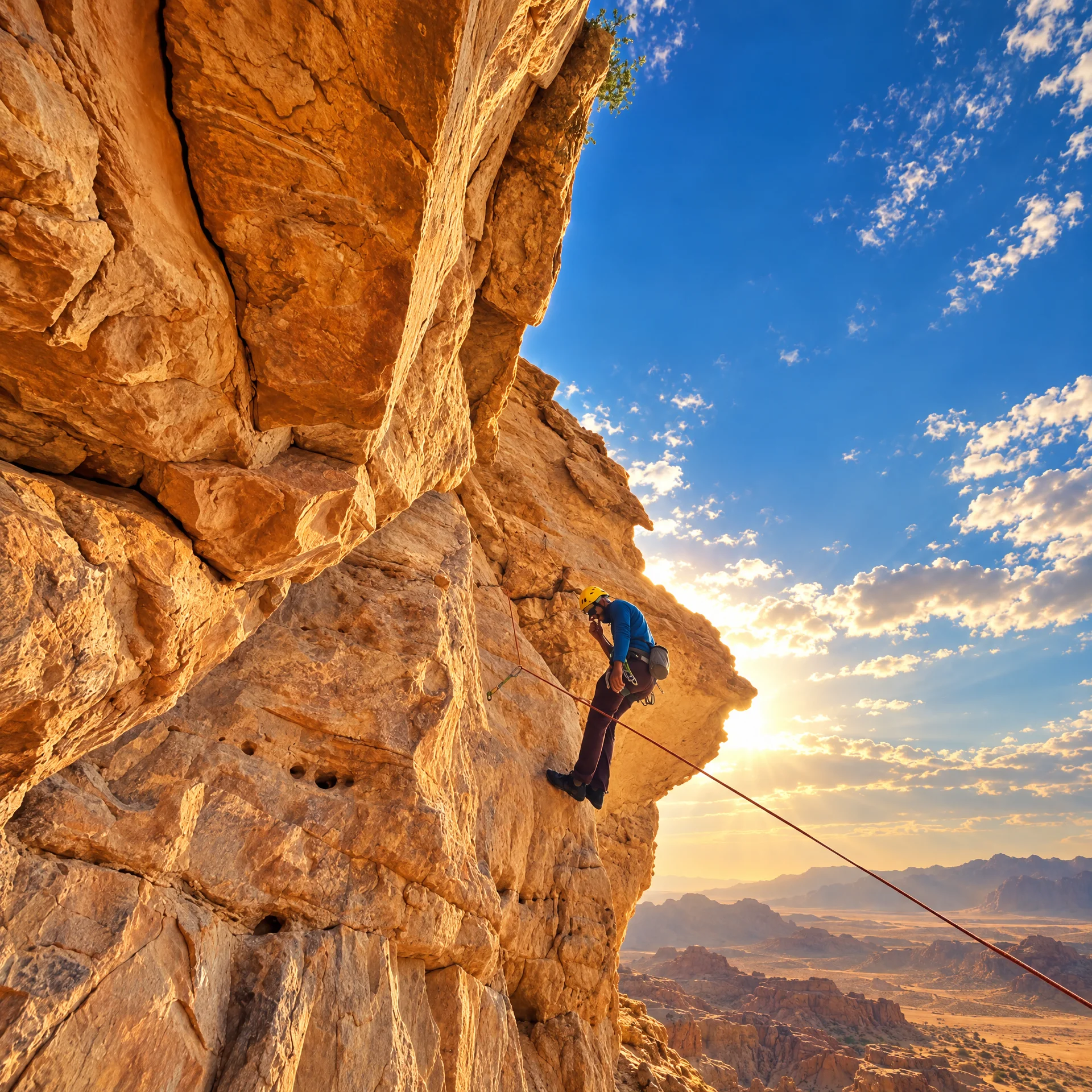
Climbing combines problem-solving, movement and trust in a system and partner. You do not need exceptional strength to begin, but you do need a suitable learning environment, correct equipment and inspection and communication habits that become automatic from the first day.
Choose the right form of climbing to start
Bouldering is performed at relatively low height over protective pads and requires learning how to fall and land. Top-rope climbing uses a rope through an upper anchor with a belayer and allows beginners to learn movement at greater height. Outdoor climbing adds access, rock quality, weather and rescue factors, so a gym or qualified provider is the best starting point. Ask about route grade and the protection method. Do not enter a route simply because it looks attractive or someone else climbed it easily.
Essential equipment
Depending on the activity, you may use a harness, helmet, climbing shoes, rope, belay device and connectors. Beginners can often borrow equipment from a responsible center before purchasing. Harness and helmet fit matter, and shoes should be secure without pain that ruins training. Inspect equipment, follow manufacturer guidance and avoid items with unknown history. Personal protective equipment has service life and loading limits that appearance alone cannot confirm.
Partner checks and commands
Before every attempt, check the climber’s knot, harness closure, belay-device setup, connector lock and rope end. Use agreed commands and wait for a clear response before moving. The belayer does not use a phone or film while operating the system. They watch the climber, maintain the trained brake-hand position and do not change device or technique without instruction.
Movement matters more than strength
Use the legs to drive upward and keep the arms relaxed where possible. Find balance before the next move and watch foot placements rather than focusing only on handholds. Calm breathing reduces tension and improves decisions. When a move fails, do not immediately repeat it with more force. Change foot position, hip direction or grip and use instructor feedback.
Falling and stopping
Learning to fall in a controlled environment is part of training. In bouldering, practice landing, pad use and spotting; on ropes, learn to sit in the system and take short supervised falls. Stop for sharp pain, dizziness or loss of concentration. Finger and shoulder injuries can begin with repeated loading and weak technique, so increase difficulty gradually.
Respectful outdoor climbing
Use established approaches and routes, and do not alter protection, clean rock or add marks without permission and expertise. Respect wildlife and nesting seasons, and carry out waste. For outdoor sites, check weather, access, communication and rescue planning, and never assume installed anchors have been recently inspected.