
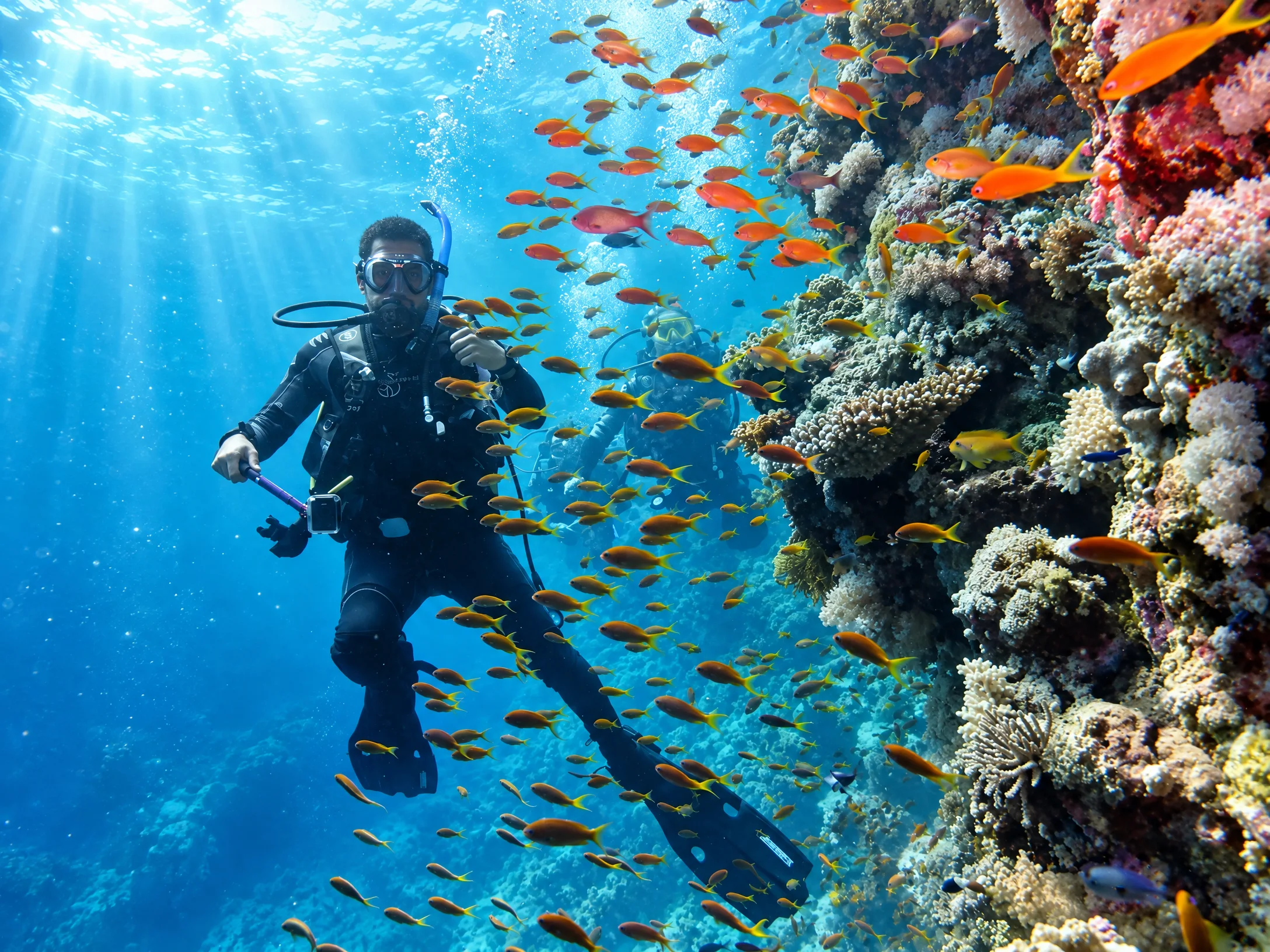
The Red Sea offers access to a remarkable underwater world, but the right beginning is not buying a large equipment set or diving with friends without training. Start by defining your goal: a short supervised introduction, or a structured certification that develops knowledge and skills for future dives.
Introductory dive or certification course?
An introductory experience is conducted under close supervision and within limits set by the center. It suits someone who wants to experience breathing and movement underwater. A recognized beginner course combines theory, confined-water practice and open-water training dives. PADI describes Open Water Diver as its first scuba certification level, and other training organizations offer comparable pathways. The key is choosing an accredited center and instructor and understanding exactly what the course qualifies you to do.
Skills learned at the beginning
You learn to assemble and check equipment, breathe continuously, equalize the ears, clear a mask, recover a regulator, control buoyancy, communicate by hand signals and ascend in a controlled way. These are not skills to memorize from a video; they require practice and instructor assessment. Good buoyancy is not only comfortable. It protects coral from contact, reduces air use and helps you remain close to your buddy.
How to choose a dive center
Check center and instructor credentials, equipment condition, student-to-instructor ratios, emergency planning and oxygen availability, and the health-screening process. Ask what the price includes: learning materials, equipment, boat or site fees and certification. A responsible center does not rush you or dismiss fear. It gives you time to understand the skills. Stop if the team skips checks or pressures you to enter the water.
Health, ears and breathing
Scuba requires honest health disclosure. Colds and congestion can prevent equalization, and some conditions or medications require medical clearance. Never force the ears or change depth rapidly to escape pain. Breathe continuously and never hold your breath while using scuba equipment. Follow training limits and the instructor’s plan, and cancel the dive when you are not physically or mentally comfortable.
What to expect on the first day
The day usually begins with registration, health screening and a briefing, followed by equipment fitting and skill practice before entering appropriate depth. You review signals, the buddy plan and entry and exit procedures. Focus on slow breathing and stay close to the instructor. Do not make photography the first priority; when skills settle, observing and enjoying the environment becomes easier and safer.
Protecting reefs and marine life
Do not touch or stand on coral, chase animals or feed them. Keep hoses and equipment close to the body so they do not drag across the bottom, and practice buoyancy before approaching sensitive formations. Choose an operator with responsible anchoring and waste practices. The quality of a dive site depends on the behavior of every visitor.