
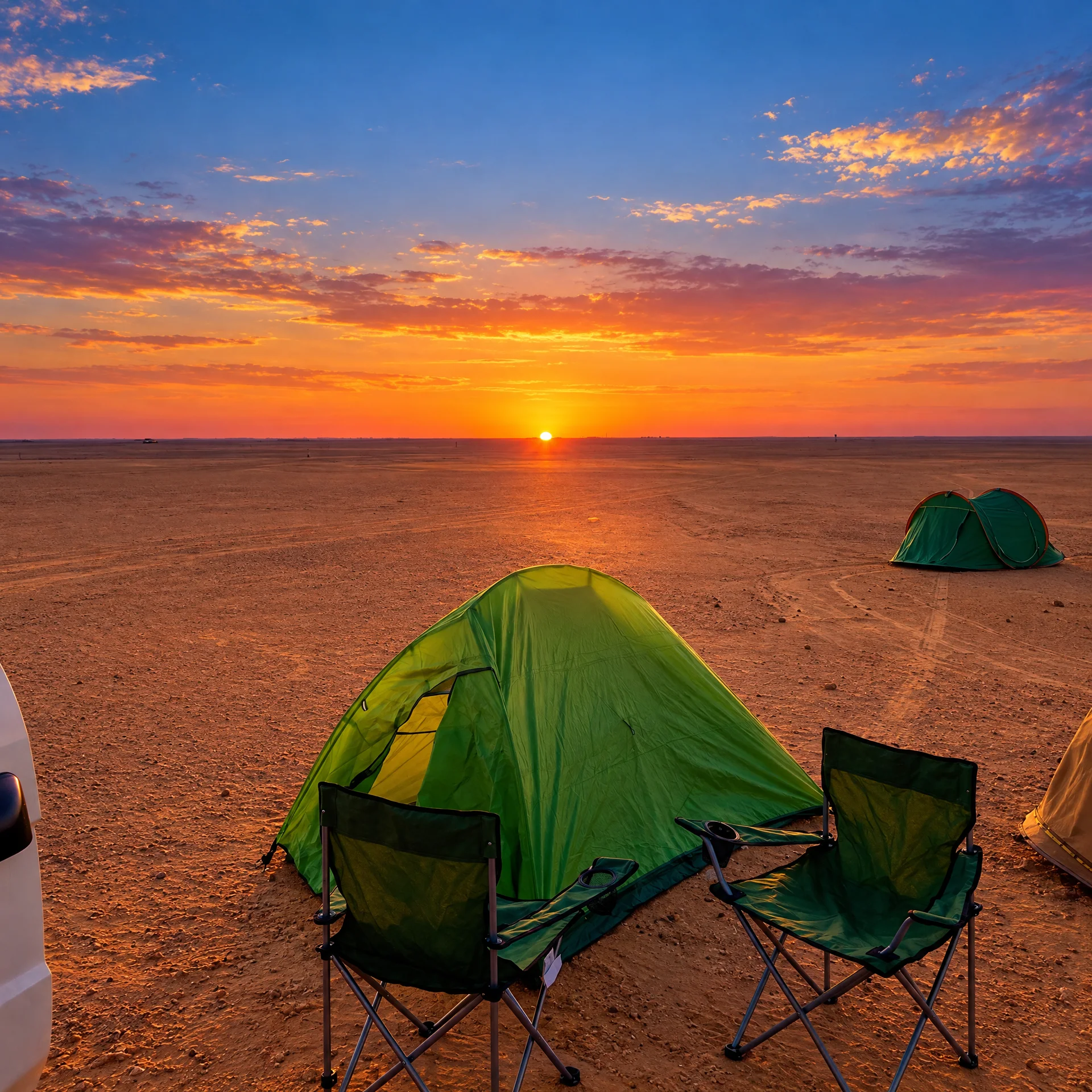
Successful camping does not depend on owning the most equipment. It depends on a few items with clear jobs: suitable shelter, warm sleep, calculated food and water, lighting, communication and a plan for changing weather. This checklist prevents two common mistakes—carrying half the house or arriving without the essentials.
Start with the location and weather
Identify whether the site is desert, mountain or coast, and check expected night temperature, wind, rain and ground conditions. A lightweight tent for a calm night may not suit strong wind, and a sleeping bag that feels warm indoors may be inadequate at elevation. Confirm that camping is permitted and identify the nearest road, service point and exit route. Do not rely on impressions or old videos because access and regulations can change.
The sleep system: tent, mat and sleeping bag
A tent protects against wind, moisture and insects, but it does not create warmth by itself. A sleeping mat reduces heat loss to the ground, and the sleeping bag must match expected conditions rather than a vague seasonal label. Practice pitching at home and check poles, pegs, guylines and a small repair kit. Choose level ground away from flood channels, unstable slopes and falling-rock exposure. Do not dig trenches or unnecessarily alter the site.
Water, food and cooking
Calculate drinking, cooking and hygiene water plus a reserve; never assume natural water is safe. Choose simple meals that cook quickly and do not require complex refrigeration. Store food and waste in sealed containers. Use a suitable stove in a ventilated area away from the tent and flammable materials. Never operate a stove or charcoal inside a closed tent because of fire and carbon-monoxide risk.
Lighting, power and communication
A headlamp is more useful than a phone light because it keeps both hands free. Carry spare power and protect the phone from moisture and cold, which can reduce battery life. Download maps and important information for offline use. Give a trusted person your location, return plan and participant names. Remote trips may require an additional communication device appropriate to the area, and the group must know how to use it.
Clothing, first aid and small tools
Use adjustable layers rather than one heavy garment. Pack dry sleep clothing, spare socks and sun or rain protection as required. Add a group-appropriate first-aid kit, personal medication, a simple multi-tool, repair tape and a whistle. Do not carry sharp or technical tools merely because they look professional. The real value lies in knowing how to use basic equipment and distributing it sensibly across the group.
Leave without a trace
Plan waste handling before arrival with strong bags and sealed containers. Pack out everything, including tissues and small food scraps. Do not leave charcoal, broken pegs or disposable gear. Follow local rules for human waste and grey water and stay away from water sources. Responsible camping means the next visitor should not see evidence that you were there.