
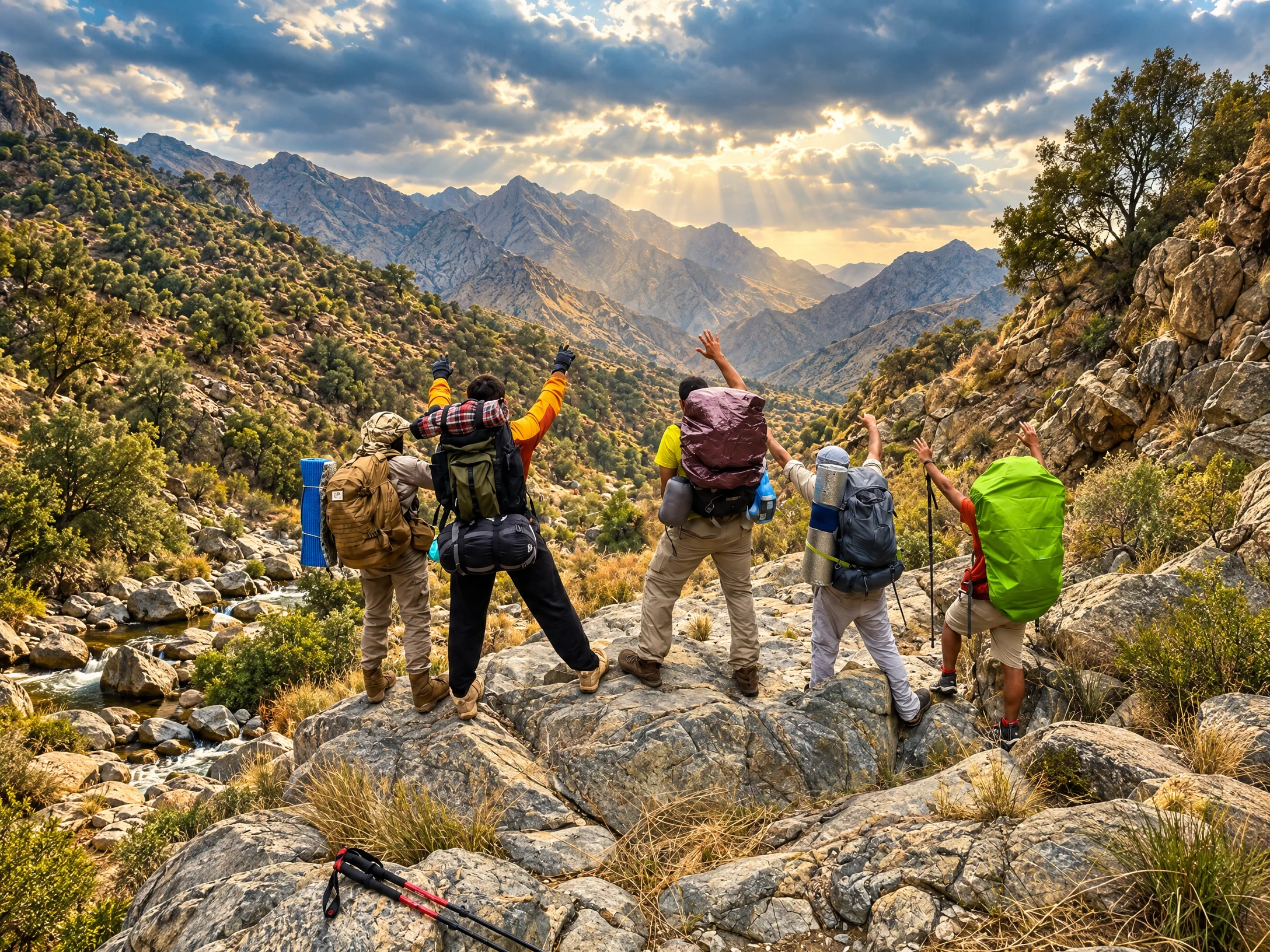
Hiking is not a race to the summit. It begins with a sound decision before departure and continues with calm management of energy, water and time. Saudi landscapes range from mountains and wadis to plateaus and desert terrain, so a beautiful photograph is never enough. You need to understand the ground, distance, elevation gain, sun exposure and access to communication or nearby services.
Choose a route that matches your real level
Start with a relatively short, clearly defined trail, ideally with an organized group. Distance alone is misleading: five kilometers on level ground is very different from five kilometers with steep ascent or loose rock. Ask about expected duration, elevation gain, terrain, exit points and whether the route involves scrambling, water crossings or exposed edges. Treat difficulty labels as decision tools, not personal challenges. Walking for an hour in the city does not automatically prepare you for an intermediate mountain route because heat, load and ascent change the effort.
Prepare your body before the trip
Two or three weeks before the hike, walk regularly and increase duration gradually. Add stairs, simple leg and balance work, and practice with the footwear and pack you will use. Never wear brand-new boots for the first time on trip day; friction blisters can end a hike early. Good sleep and an appropriate pre-trip meal matter more than trying to compensate with energy drinks. If you have a medical condition or previous injury, discuss suitability with a professional and inform the trip leader.
What belongs in a hiking pack?
Carry water appropriate to heat and duration plus an emergency reserve, easy-to-digest snacks, sun protection, a hat, an extra layer and a light even when return is planned before sunset. Add a power bank, whistle, basic first aid and any personal medication. Distribute weight well and keep frequently used items accessible. Do not carry technical tools you cannot use, and do not rely on the phone alone for navigation. Download offline maps and save the start and return points.
Manage water, heat and time
Do not wait for extreme thirst. Drink at regular intervals and watch yourself and the group, particularly during heat and ascent. Headache, dizziness, cramps, nausea and confusion are warning signs. Find shade, stop exertion and follow the emergency plan instead of continuing from embarrassment. Set a firm turnaround time before departure. If the group falls behind, the professional decision is to return even without reaching the endpoint. The summit is optional; a safe return is the primary objective.
What if you leave the route?
Stop immediately and do not continue in a random direction. Check the last confirmed location, contact the leader or emergency services if possible and preserve phone battery. Do not descend into an unknown wadi simply because it looks easy; it may lead to drops or terrain that is difficult to exit. On group trips, never leave for photographs without telling someone. Many incidents begin with a small separation and grow into a search, delay and additional exposure.
Trail etiquette and nature protection
Plan ahead, use durable trails and surfaces where possible, and carry out all waste. Do not remove plants or rocks, approach wildlife or feed animals. Use designated rest and camping areas, and light fires only where permitted and after confirming complete extinguishment. Responsible behavior protects the site, helps preserve access and improves the experience for other visitors.